You've probably heard someone refer to painting, journaling, or crafting as their "art therapy." While art-making can be deeply meaningful and emotionally supportive, art therapy is actually a distinct mental health profession with specialized education, training, and clinical standards.
So, what's the difference between art therapy and creative wellness? And how do you know which one is right for you?
Although the two approaches share a belief in the value of creative expression, understanding their differences can help you make informed decisions about your own well-being.
What is art therapy?
Art therapy is a mental health profession that combines artistic expression, psychological theory, and a therapeutic relationship to support individuals experiencing emotional, psychological, and behavioral challenges.
Professional art therapists hold master's-level or higher degrees and complete specialized clinical training. Additional professional credentials and licensure requirements vary by jurisdiction and stage of practice.
Art therapists may work with individuals navigating conditions such as PTSD, anxiety, depression, and other mental health concerns. Their work can involve clinical assessment, treatment planning, and therapeutic interventions.
Art therapy is much more than simply making art to feel better. It involves a trained professional using the creative process within a clinical framework to support a client's treatment goals.
What is creative wellness?
Creative wellness, sometimes referred to as healing arts, takes a different approach.
Rather than diagnosing or treating mental health conditions, creative wellness focuses on providing an intentional, supportive, and nonjudgmental space for artistic expression, self-reflection, and personal growth.
It's an opportunity to step away from the demands of everyday life and reconnect with yourself through creativity.
I often describe the experience as a form of active meditation.
For a little while, you get to set aside your responsibilities, put down your phone, and focus on the simple act of making something.
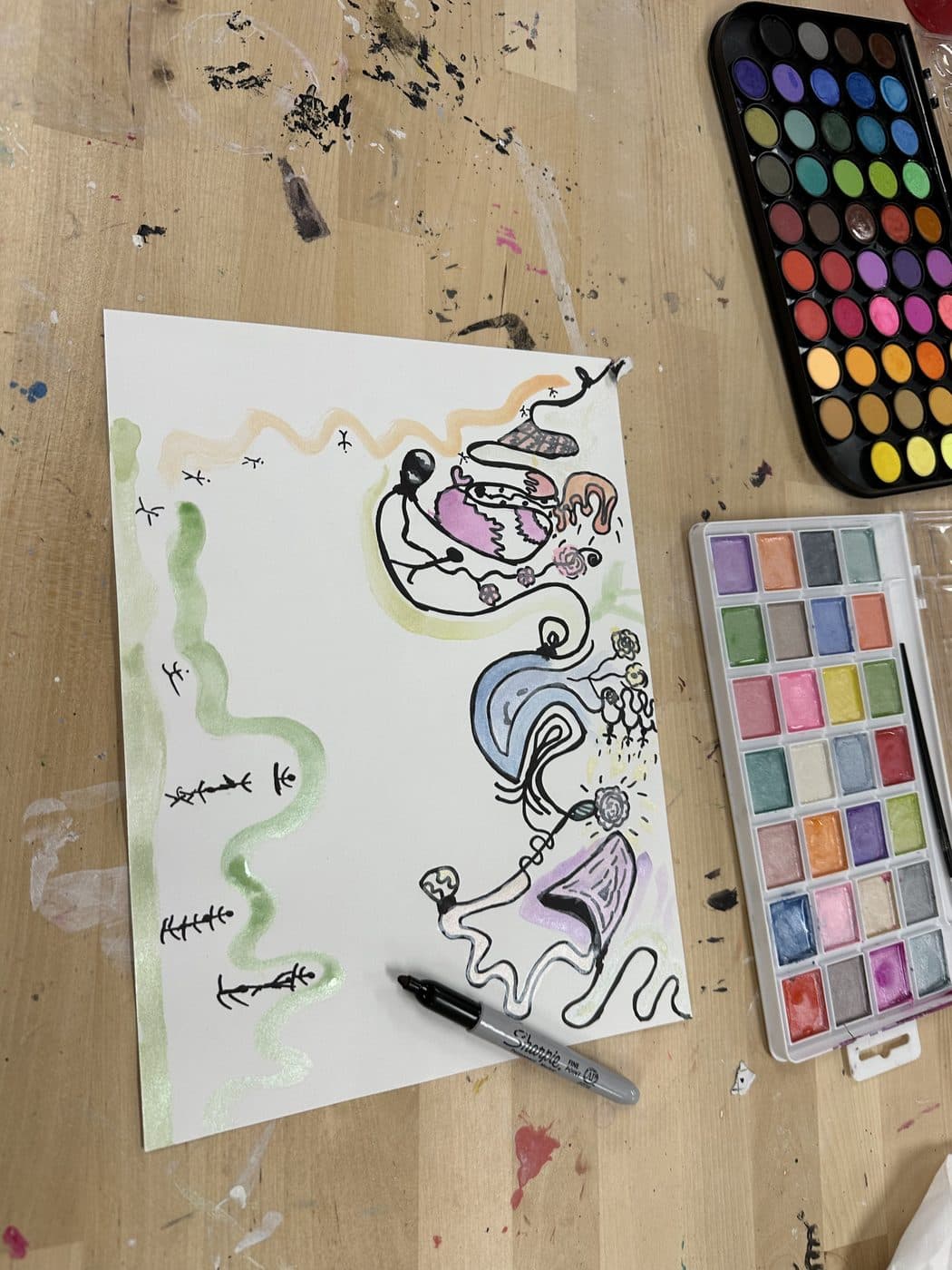
Maybe you're experimenting with watercolors, creating a collage, working with clay, or exploring your thoughts through an art journal.
There's no pressure to produce something beautiful, and you certainly don't need to identify as an artist to participate.
The value comes from the experience itself.
In my work as an artist and creative wellness facilitator, I've witnessed how meaningful it can be for people to give themselves permission to slow down and create.
When so much of our time is spent taking care of others, meeting expectations, and worrying about what comes next, having space that belongs entirely to you can feel incredibly restorative.
What happens when emotions come up during art-making?
One of my favorite things about creative expression is that sometimes the process brings things to the surface that we weren't necessarily expecting.
A particular color, image, memory, or creative decision might inspire reflection or spark a conversation.
And that's okay.
Although my sessions are not talk therapy, I welcome authentic conversation, vulnerability, and emotional expression throughout the creative process.
I will never pry, pressure someone to share personal information, or assume that I understand their experiences based on the artwork they create.
Instead, I offer a listening ear, thoughtful reflection prompts, and space for participants to explore their own experiences at their own pace.
Sometimes that looks like talking through an idea together. Other times, it means sitting quietly and allowing the artwork to speak for itself.
There is room for the messiness, the emotions, and the authenticity of being human.
You don't need to arrive feeling positive, inspired, or ready to share your life story.
You simply need to show up as you are.
Your artwork belongs to you, and so does its meaning
Another important part of my approach is allowing participants to determine the meaning of their own artwork.
I'm not here to analyze your color choices, interpret your imagery, or tell you what your creative decisions reveal about your mental health.
In fact, collaborative exploration of meaning and respect for the artist's perspective are also important principles within professional art therapy.
During our sessions, I might ask questions like:
- What was your experience like while creating this piece?
- Is there anything about your artwork that surprised you?
- What does this image, color, or creative decision mean to you?
- Is there anything you'd like to take away from this experience?
Sometimes participants discover personal significance in something they created without initially intending to.
Other times, they simply enjoy the process and leave with something they love.
Both experiences are equally welcome.
While creating a beautiful finished product is never the primary goal, many participants find themselves developing a personal connection to their artwork.
A piece might become a reminder of a meaningful experience, an affirmation of their identity, or a reflection of a particular season of life.
And sometimes, it's simply something they're proud to have made.
That matters, too.
Can creative wellness and therapy work together?
Absolutely.
Creative wellness isn't intended to replace professional mental health care, but it can be a meaningful addition to someone's existing self-care routine.
Someone attending traditional talk therapy might also enjoy creative wellness sessions as an opportunity to explore artistic expression, practice mindfulness, and reconnect with their creativity.
Others may simply be looking for a new hobby, a screen-free activity, a sense of community, or a little more joy in their everyday lives.
You don't need to be experiencing a mental health challenge to benefit from creative expression.
If you're seeking diagnosis, mental health treatment, or clinical support for trauma or other psychological concerns, a qualified mental health professional is the appropriate resource.
My role is different: I provide creative guidance, encouragement, and a supportive environment where you can explore what art-making means to you.
My background and approach
My commitment to creative wellness comes from years of experience as an artist, educator, community advocate, and healing arts facilitator.
I hold associate's and bachelor's degrees in studio art and art education, have completed a healing arts certification through the University of Florida, and have participated in facilitator training workshops through UCLA.
My experience also includes facilitating creative experiences with sensitive populations, including incarcerated women and young people navigating mental health challenges.
Through my involvement with the Prison Arts Collective and other community-based projects, I've seen firsthand how providing access to creative expression can encourage connection, reflection, and a greater sense of possibility.
These experiences have shaped my belief that creativity is a valuable human resource that everyone deserves access to.
Although I am not a licensed mental health professional or credentialed art therapist, I bring a combination of artistic expertise, educational experience, specialized facilitation training, and community-centered practice to the work I offer.
My goal is to make creative expression approachable, meaningful, and accessible to people from all backgrounds and experience levels.
Because you shouldn't have to be an artist to experience the joy of making art.
And you shouldn't have to wait until you're struggling to make time for your well-being.
Explore creative wellness with me
At Jasmine Solei Creative Experiences, I offer guided creative wellness sessions designed to help you slow down, reconnect with yourself, and explore the possibilities of creative expression.
Whether you're experiencing burnout, looking for a meaningful self-care practice, or simply wanting to make more room for creativity in your life, there's a place for you here.
Through individual sessions, creative experiences for couples, and community workshops, we'll explore art-making in a supportive environment where curiosity matters more than perfection.
No prior art experience necessary.
Just come as you are.
Want to learn more about my work?
I've been fortunate to have my creative and community-based work featured in several publications. You can read more about my experiences and the philosophy behind my practice on the press page.